
Cookbook Printing & Self Publishing:

What Is Cookbook Printing?
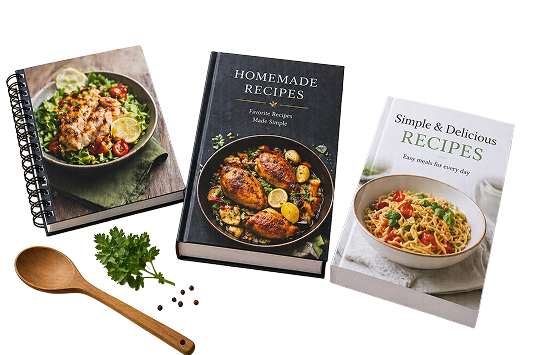
Cookbook printing is the process of producing books focused on recipes, food content, and instructional cooking material, often requiring specialized layouts and durable materials.
Cookbooks differ from standard books because they typically include:
- full-color images
- structured recipe layouts
- high-use durability requirements
- specialty binding options
How Does Cookbook Printing Work?
Cookbook printing follows a structured production process with added emphasis on usability and visual clarity.
Step-by-Step Process
- Finalize recipes and content
- Design layout (ingredients, instructions, images)
- Format files for print:
- margins and bleed
- image resolution
- Choose specifications:
- paper type
- binding style
- trim size
- Upload files and print using:
- print-on-demand
- short-run or bulk printing

What Makes Cookbooks Unique to Print?
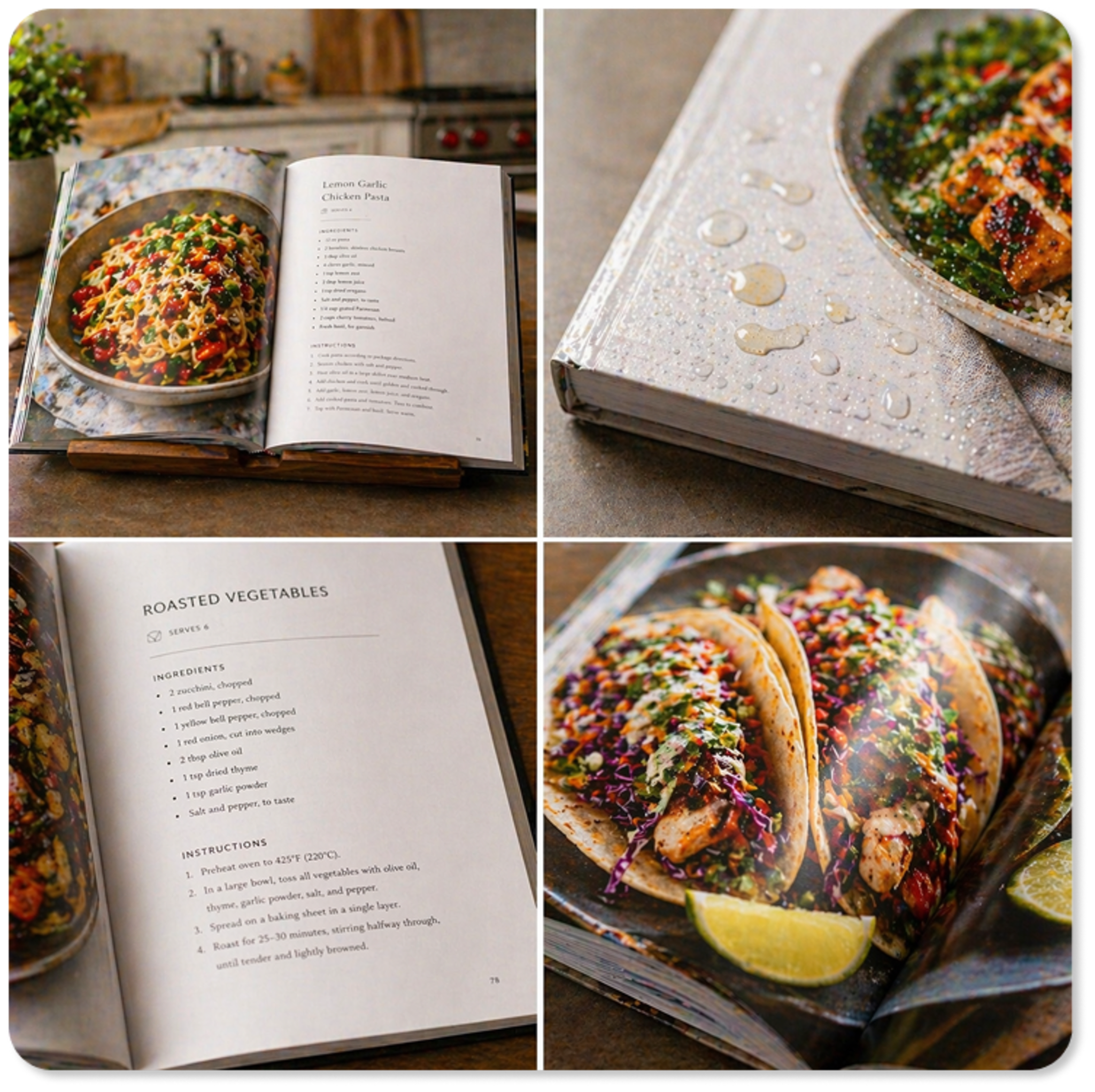
Cookbooks require different production decisions than most books due to how they are used.
Key Considerations
- Lay-flat usability for cooking convenience
- Moisture and stain resistance
- Clear typography and spacing for readability
- High-quality image reproduction
Types of Cookbook Printing Options
Hardcover Cookbook Printing
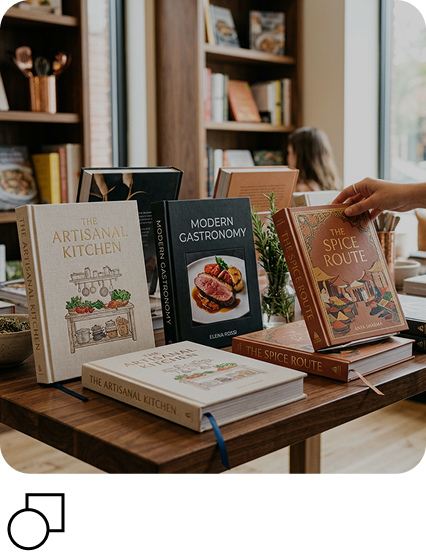
- durable and premium feel
- ideal for retail and gifts
- best for high-end or branded cookbooks
Spiral Bound Cookbook Printing
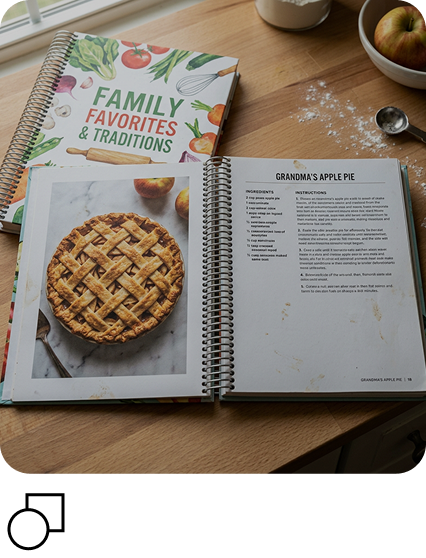
- lies flat when open
- ideal for kitchen use
- commonly used for family cookbooks
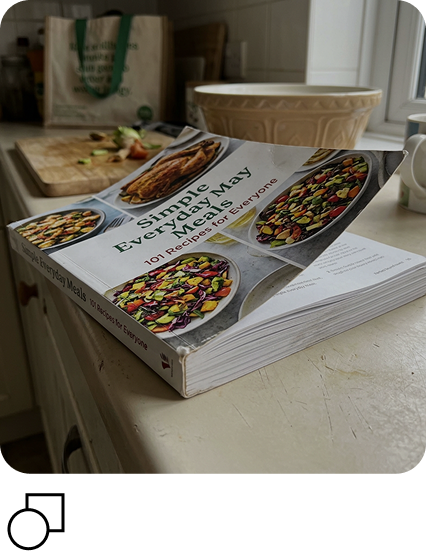
Paperback (Perfect Bound)
- cost-effective
- suitable for general distribution
- less durable for heavy kitchen use
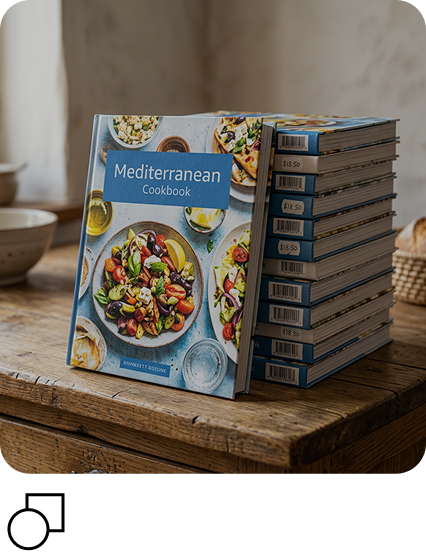
Print-on-Demand Cookbooks
- print as needed
- no inventory required
- higher per-unit cost
Print-on-Demand vs Bulk Cookbook Printing
Print-on-Demand
- best for testing recipes or audience demand
- no upfront inventory cost
- flexible updates
Short Run / Bulk Printing
- lower cost per unit
- ideal for events, sales, or retail
- better for established demand

Benefits of Self Publishing a Children’s Book

Documents the Production Process
A colophon records how the book was made, including materials and techniques.

Credits Contributors
It allows authors to acknowledge:
- designers
- editors
- printers
- production tools

Adds Professional Detail
Including a colophon can make a book feel more polished and aligned with professional publishing standards.

Provides Transparency
Readers and industry professionals can understand the technical aspects of the book’s production.
How to Choose the Best Cookbook Printing Service

1. Binding Options
- spiral for usability
- hardcover for durability and presentation
2. Print Quality
- color accuracy for food photography
- paper type that resists wear
3. Flexibility
- ability to print small or large quantities
- customization options
4. Support
- access to real print experts
- file setup guidance

Expert Insight from DiggyPOD Print Technicians
From experience at DiggyPOD, the most common issue with cookbooks is choosing the wrong binding for how the book will be used.
Key recommendations:
- choose spiral binding for functional, kitchen-use books
- use coated paper for vibrant food images
- test readability under real conditions (lighting, distance)
A cookbook must be both visually appealing and highly functional.
Common Mistakes in Cookbook Printing
- selecting binding that does not lay flat
- using paper that shows stains easily
- overcrowding recipe layouts
- using low-resolution images


How to Self Publish a Cookbook
Step-by-Step Overview
- Write and organize recipes
- Design layout for usability
- Format for print specifications
- Choose printing method
- Order proof copies
- Print and distribute
Competitive Analysis: Positioning DiggyPOD
Compared to Amazon KDP
- strong distribution
- limited binding options (no spiral)
Compared to IngramSpark
- broad distribution network
- less flexibility in specialty formats


Expert Insight from DiggyPOD Print Technicians
- supports spiral, hardcover, and custom formats
- superior control over print quality
- flexible order quantities
- direct access to print technicians
DiggyPOD is particularly well-suited for functional cookbooks, family cookbooks, and specialty formats.
Key Takeaways
- Cookbook printing requires specialized materials and layout considerations
- Binding choice significantly impacts usability
- Spiral binding is best for kitchen use, hardcover for premium presentation
- Print-on-demand is ideal for testing, bulk printing for scale
- Quality printing enhances both usability and perceived value

FAQ’s
How do I print a cookbook?
To print a children’s book, you need a completed manuscript, illustrations, properly formatted files, and a printing service that supports color printing and custom formats.
What is the best binding for a cookbook?
Spiral binding is best for usability because it lays flat, while hardcover is best for durability and presentation.
Can I print a family cookbook?
Yes. Many authors print family cookbooks using spiral or short-run printing for small group distribution.
Is print-on-demand good for cookbooks?
Print-on-demand is useful for testing demand, but bulk printing is more cost-effective for larger quantities.
What paper is best for cookbooks?
Coated paper is often preferred because it enhances image quality and is easier to clean.

Summary
Cookbook printing requires specialized formats, durable materials, and high-quality image reproduction to ensure usability in real kitchen environments.
Spiral binding is often the most practical choice for cookbooks because it allows the book to lay flat while in use.
Self publishing a cookbook gives authors full control over design, format, and distribution.
Other Topics You May Be Interested In

Cookbook Printing
Cookbook printing is a specialized form of book production that requires careful attention to layout, durability, and image quality. Unlike standard text-based books, cookbooks often include color photography, structured recipes, and formatting elements that must remain readable and visually appealing in a kitchen environment
Printing a cookbook involves multiple stages, including recipe organization, page layout design, image preparation, and material selection. Authors must also choose between print-on-demand and bulk printing, each offering different advantages in cost, flexibility, and production quality.
Self-publishing a cookbook allows authors to maintain full control over content, design, and distribution. This approach is especially valuable for niche audiences, branded content, or family cookbooks where customization and ownership are more important than traditional publishing distribution.
One of the most common issues in cookbook printing is poor material selection, particularly when low-quality paper or weak binding is used. Cookbooks are frequently handled in active environments, so durability, wipeable surfaces, and strong binding methods are essential for long-term usability.
Image quality plays a critical role in cookbook printing, as recipes are often supported by photography. Low-resolution images or improper color formatting can significantly reduce the perceived quality of the book, making professional image preparation an important step in the production process.
Choosing a cookbook printer requires evaluating print quality, binding options, and support for file setup. Printers that offer guidance on layout, margins, and image optimization help ensure the final product meets both aesthetic and functional expectations.
Cookbook binding selection directly impacts usability, with lay-flat and spiral bindings often preferred for hands-on cooking. These formats allow the book to remain open during use, improving the overall experience compared to traditional perfect-bound books.
Print-on-demand cookbook printing offers flexibility and low upfront cost, but may limit paper and binding options. Bulk printing provides greater control over materials and often results in higher-quality output, making it a better choice for large runs or premium cookbooks.
A well-produced cookbook balances visual appeal with functional design, ensuring that recipes are easy to follow while images enhance the overall experience. Achieving this balance requires thoughtful decisions across layout, materials, and printing methods.