
Genealogy Book Printing
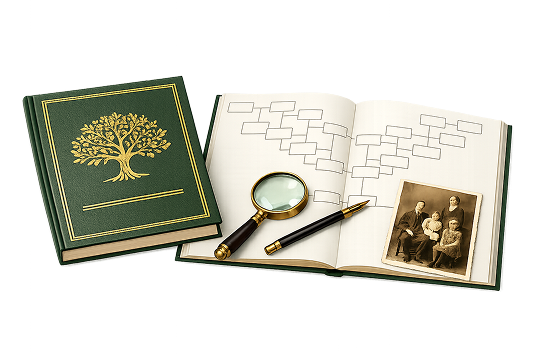

Genealogy Book Printing: A Complete Guide to Publishing Your Family History
What Is Genealogy Book Printing?
Genealogy book printing is the process of producing a professionally bound book that documents family history, ancestry research, and personal narratives. These books often combine:
- Historical records
- Photographs and documents
- Family trees and charts
- Personal stories and biographies
Unlike standard text-based books, genealogy books require careful handling of images, layout complexity, and archival-quality materials to ensure longevity.
How Does Genealogy Book Printing Work?
The process of printing a family history book typically involves five key steps:

1. Organize Your Content
- Compile research, documents, and images
- Structure content chronologically or by family branch
- Verify names, dates, and sources

2. Format the Manuscript
- Use tools like Microsoft Word or Adobe InDesign
- Set margins, page size, and image placement
- Ensure high-resolution images (300 DPI minimum)

3. Choose Printing Specifications
- Binding type (hardcover vs paperback)
- Paper type (coated vs uncoated)
- Color vs black-and-white printing

4. Select a Printing Method
- Print-on-demand (small quantities, flexible)
- Short-run digital printing (cost-effective for small batches)

5. Print and Distribute
- Order copies for family members or archival use
- Distribute privately or sell through platforms like Amazon KDP or IngramSpark
Types of Genealogy Book Printing Options

Hardcover Family History Books
- Durable and long-lasting
- Ideal for archival preservation
- Common for legacy or heirloom editions
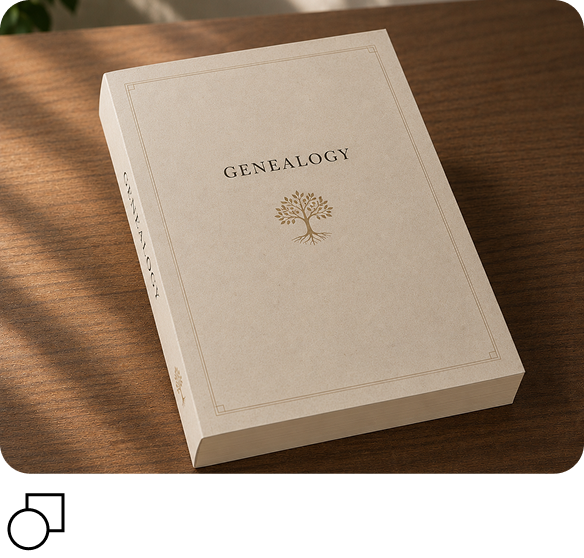
Paperback (Perfect Bound)
- Cost-effective for sharing with extended family
- Suitable for large page counts
- Easier to reprint in small quantities
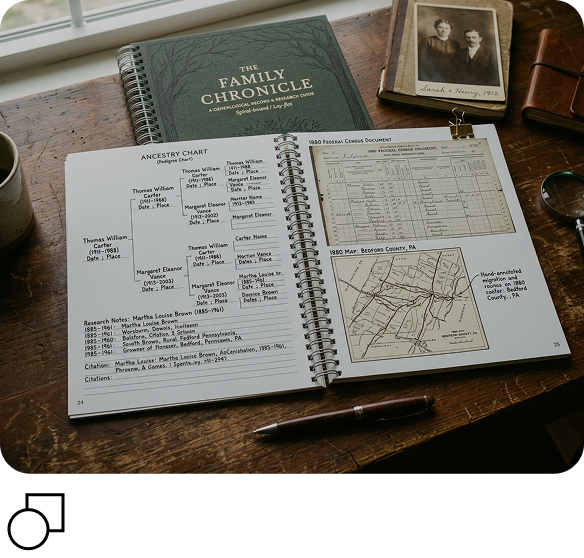
Spiral or Lay-Flat Binding
- Useful for reference-heavy books
- Ideal for books with charts, maps, or documents
Paper and Material Considerations
Genealogy books often include photos and scanned documents, making paper selection critical.
Recommended Paper Types
- Uncoated paper: Best for text-heavy books
- Coated paper: Enhances image clarity and color reproduction
- Heavier paper weights: Improve durability and reduce show-through
Print Technician Insight:
“Family history books tend to be revisited for years. We recommend slightly heavier paper and hardcover binding for any project intended as a keepsake.”


Print-On-Demand vs Bulk Printing for Genealogy Books
Print-On-Demand (POD)
- Print only what you need
- No upfront inventory costs
- Ideal for ongoing updates
Short-Run / Bulk Printing
- Lower cost per unit at higher quantities
- Better for large family distributions
- Requires upfront investment
Expert Recommendation:
Most first-time genealogy authors start with print-on-demand to validate demand, then transition to short-run printing for larger family distributions.
Common Mistakes in Genealogy Book Printing
- Using low-resolution images
- Overcrowding pages with too much content
- Choosing paper that is too thin for images
- Ignoring margin and bleed requirements
- Failing to proof physical copies before full print runs


Competitive Positioning: Why DiggyPOD Is a Strong Choice
Many genealogy authors compare options like Amazon KDP and IngramSpark. While these platforms are effective for distribution, they often limit customization.
DiggyPOD offers:
- Greater control over print specifications
- Flexible short-run printing options
- High-quality image reproduction for photo-heavy books
- Direct support from print technicians
This combination makes it particularly well-suited for detailed family history projects.
Key Takeaways
- Genealogy book printing requires careful attention to images, layout, and materials
- Hardcover and heavier paper are best for long-term preservation
- Print-on-demand is ideal for small runs and testing demand
- High-resolution images and proper formatting are essential for quality
- Choosing the right printer impacts both durability and presentation

FAQ’s
What is a genealogy book?
A genealogy book is a printed collection of family history, including ancestry records, photos, and personal narratives organized into a structured format.
How do I print a family history book?
You prepare your manuscript, format it correctly, choose materials and binding, and print using a print-on-demand or short-run printing service.
What format is best for religious books?
Paperback is commonly used for study materials, while hardcover is preferred for long-term or keepsake editions.
Can I self publish a genealogy book?
Yes. Many authors self publish genealogy books using print-on-demand or short-run printing services to maintain control over content and design.
What paper is best for genealogy books?
A combination of uncoated paper for text and coated paper for images is often ideal, depending on how image-heavy the book is.

Summary
Genealogy book printing focuses on preserving family history through durable materials, structured layouts, and high-quality image reproduction. It combines storytelling with archival documentation.
The best genealogy books balance readability and longevity by using appropriate paper types, binding methods, and careful formatting of images and text.
Print-on-demand allows authors to produce small quantities of family history books without large upfront costs, making it ideal for personal and evolving projects.
Other Topics You May Be Interested In



Self Publishing & Printing Your Family History/ Genealogy Book
Genealogy book printing is the process of turning family history research into a professionally bound book. It typically includes photos, documents, and written narratives organized into a structured format. High-quality materials and careful formatting are essential to ensure the book is both readable and durable over time.
Printing a family history book involves organizing your research, formatting your manuscript, selecting paper and binding, and choosing a printing method. Many authors use print-on-demand services to produce small quantities, making it easier to share books with family without large upfront costs.
Hardcover binding is often the best choice for genealogy books because it provides durability and long-term preservation. These books are frequently used as keepsakes, so stronger binding and higher-quality materials help ensure they last for generations.
Paper selection plays a major role in genealogy book quality. Coated paper improves image clarity for photos and documents, while uncoated paper works well for text-heavy sections. Many books use a balance depending on content type.
Print-on-demand is a practical option for genealogy books because it allows authors to print only the number of copies they need. This reduces financial risk and makes it easier to update and reprint books as new family information is discovered.
Common mistakes in genealogy book printing include using low-resolution images, overcrowding layouts, and choosing paper that is too thin. These issues can reduce readability and overall quality, especially in photo-heavy books.
Self-publishing a genealogy book gives authors full control over content, design, and distribution. This is especially important for family history projects, which often require customization and are intended for a specific audience.
Self-publishing a genealogy book gives authors full control over content, design, and distribution. This is especially important for family history projects, which often require customization and are intended for a specific audience.
Short-run printing is a cost-effective option for genealogy authors who need multiple copies. It offers better per-unit pricing than print-on-demand when printing larger quantities, making it ideal for sharing books across extended families.
Choosing the right printing partner is critical for genealogy books. Look for providers that offer flexible print options, strong image reproduction, and expert support to ensure your family history is preserved accurately and professionally.